

Pork is a main dish in much of Phuket's Chinese-influenced cooking, and it is absent from the plates of many Muslim residents and visitors. Both facts belong to the island's story. The dishes below come mainly from the Hokkien kitchen. This guide labels each one so that everyone can choose what suits them, whether for religion, health or taste.
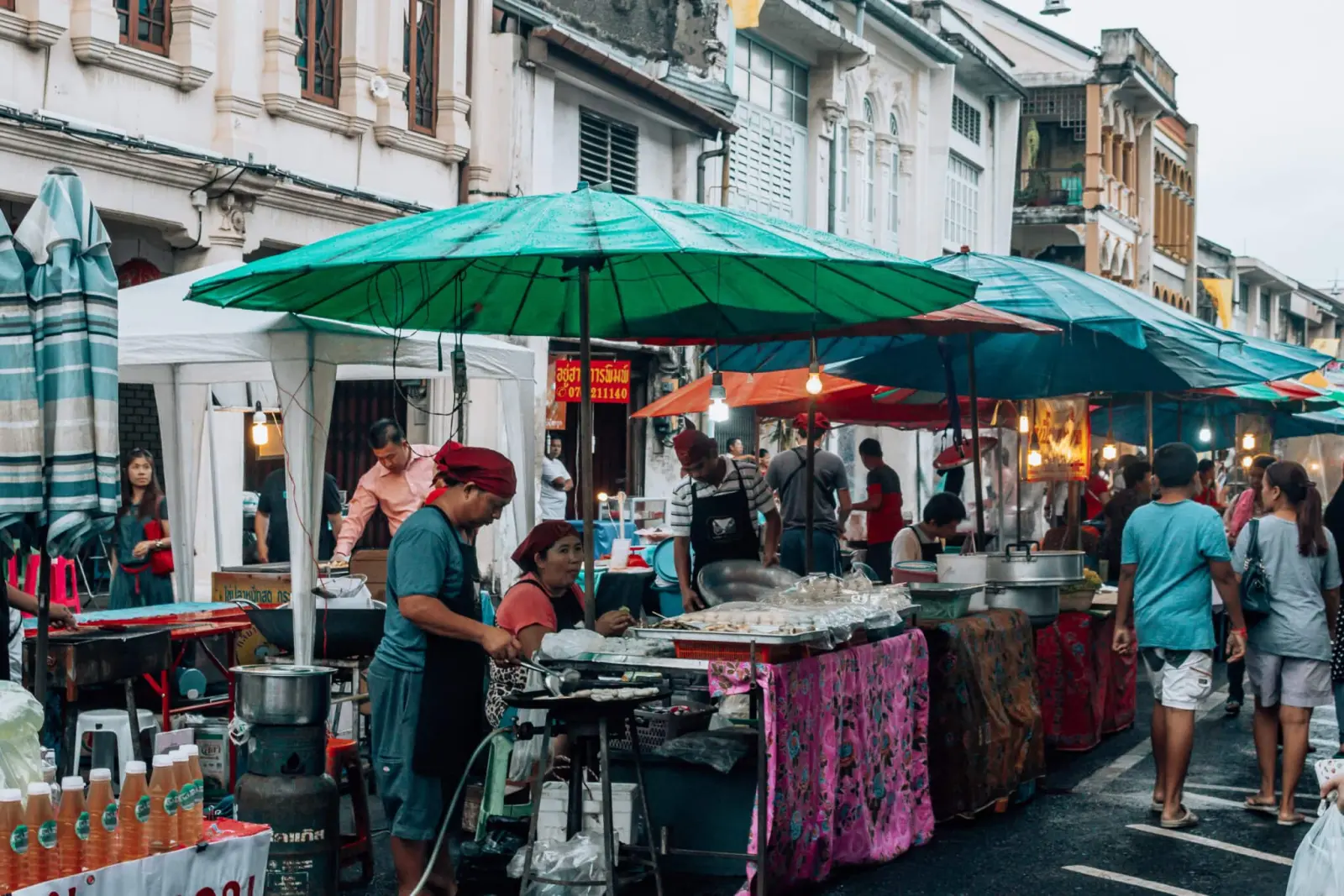
Phuket dishes and pork at a glance
Where the pork comes from
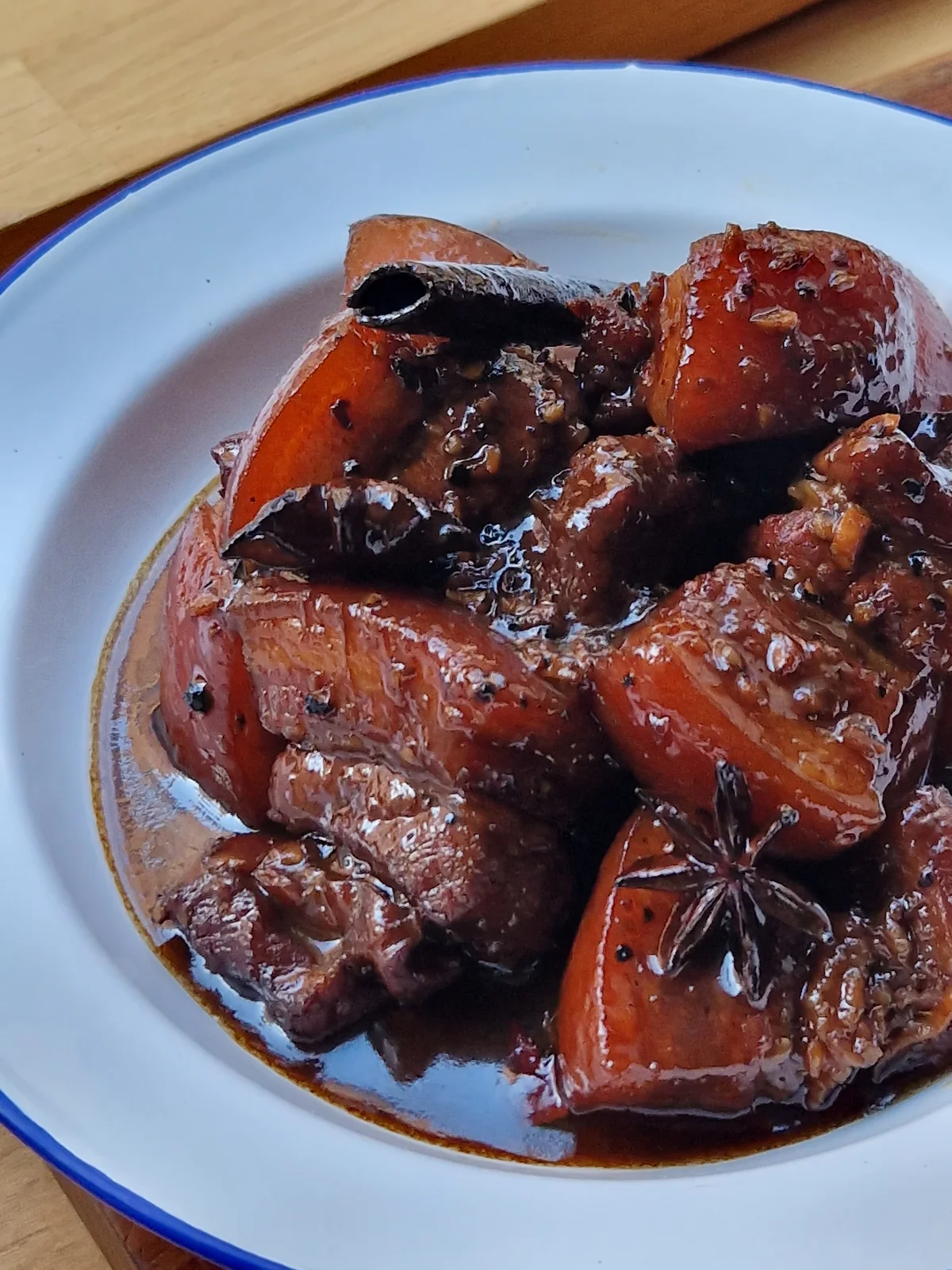
Hokkien Chinese migrants came for tin in the 1800s, and their kitchens brought dishes such as mee hokkien and moo hong. Southern Thai cooking also uses pork, for example in stir-fries with curry paste. Dim sum in Phuket is simpler and pork-heavier than the Hong Kong style. The history is in how Phuket became multicultural.
Eating with respect
Many Muslim Phuket residents do not eat pork, and many kitchens in places such as Kamala and Cape Panwa are halal. Please do not bring pork into a halal kitchen, and do not ask a halal cook to prepare it. If you are eating with Muslim friends, choose a place that is clearly halal. Our halal food guide has more.
Useful phrases
- "Mai sai moo" (ไม่ใส่หมู) means "no pork".
- Ask "Mee moo mai?" (มีหมูไหม) for "is there pork in it?".
- Sauces and stocks can contain pork even when the dish looks vegetarian, so ask.
Where the pork-free choices are
- Seafood and sour curries, such as gaeng som, are usually pork-free. See Rawai for seafood.
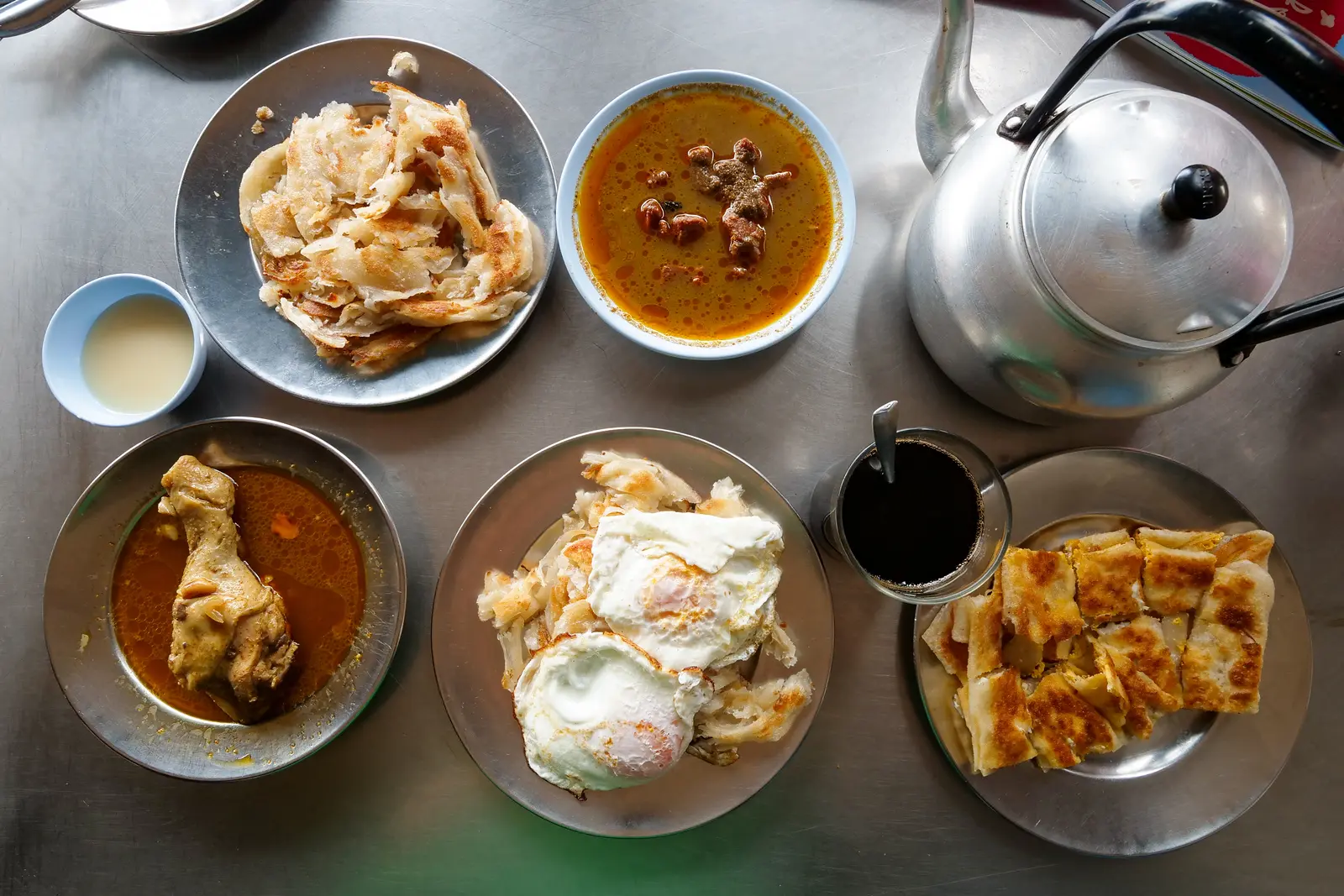
- Roti and coconut crepes are sweet snacks without meat in the main recipe.
- In October the Phuket Vegetarian Festival changes the stalls completely. See the festivals guide.
Where to eat: market zones
Eat pork dishes at Old Town's morning and Sunday market zones; see the Phuket Old Town guide and Phuket local food. Hours change, so check before you go.
On our tour
Our Phi Phi tour includes a buffet-style lunch. If you have halal, vegetarian or allergy needs, contact us before you book via our contact page.
Return to the master Phuket areas, history and food guide.


