Quick answer: Thailand's Department of National Parks (DNP) counted 451 blacktip reef sharks at Maya Bay on the morning of 3 November 2026. It is the highest number recorded since the survey project began in 2023. Maya Bay is open to visitors, but swimming is not allowed. Last updated 16 November 2026.

A new high: 451 sharks in November 2026
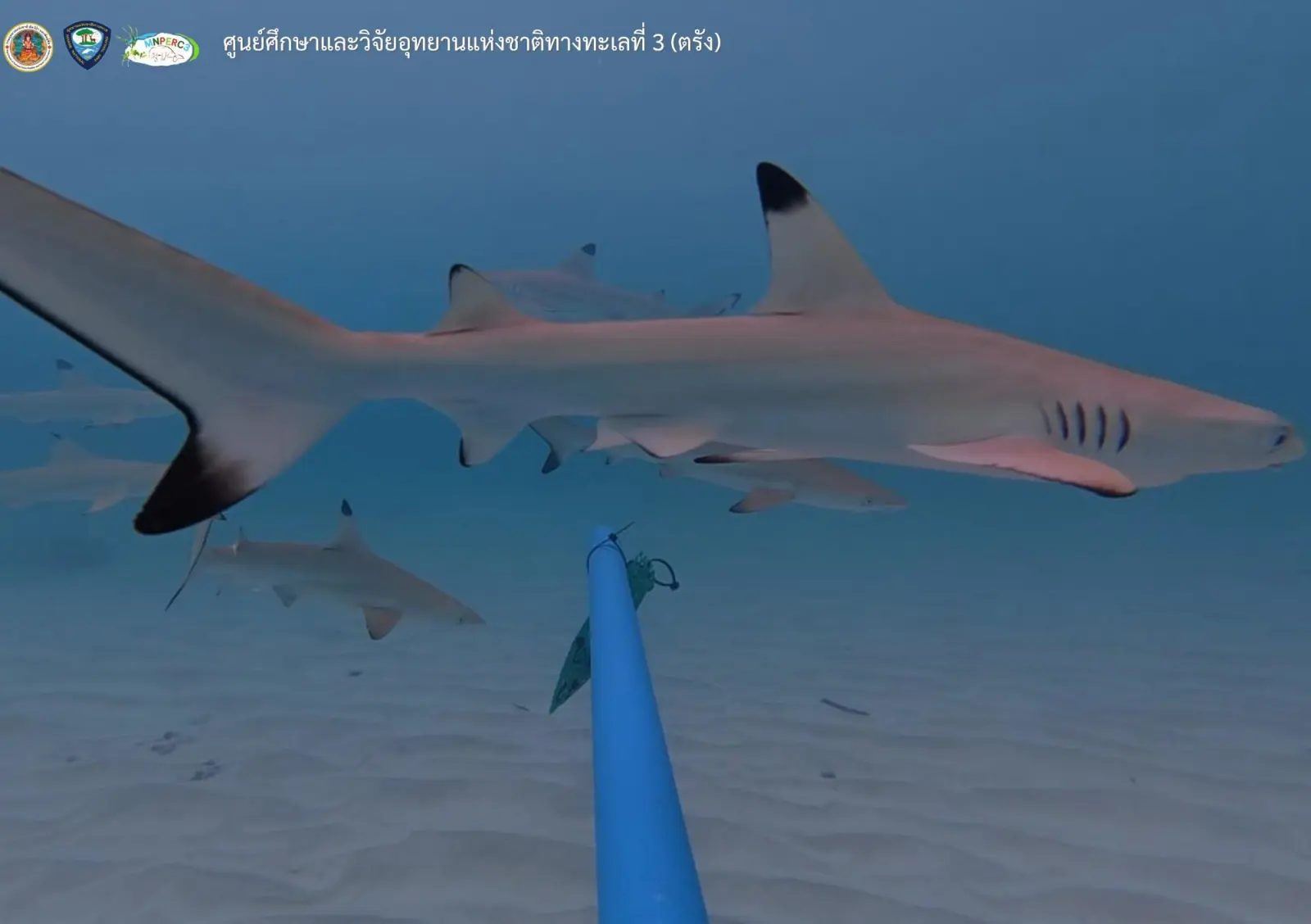
Maya Bay is best known as the postcard beach from The Beach, but its most important residents live in the water. In November 2026 the DNP's Marine National Park Research Center 3 (Trang) ran a seven-day field survey in the bay, working with co-op students from Prince of Songkla University's Faculty of Natural Resources. The center shared the results on 10 November 2026. Read the center's post (in Thai).
The team used three methods:
- Drones: 15 flights counted sharks from above.
- Baited underwater cameras: 22 deployments recorded how the sharks behaved around the bait.
- Water testing: 22 checks found an average sea temperature of 30.87°C, salinity of 31.16 ppt and pH of 8.62, which the DNP says suit marine life.
What the survey found

- The peak count: drones counted 451 sharks on the morning of 3 November. That is the highest figure of the month's survey and the highest since the project began in 2023.
- Best time of day: dawn averaged about 329 sharks and midday about 277. The evening survey could not be completed because of poor visibility.
- Adults and subadults: sharks over one metre long gathered and cruised mostly along one side of the bay, close to shore and below the cliff. The DNP says this grouping may be linked to breeding behaviour, but it needs more study.
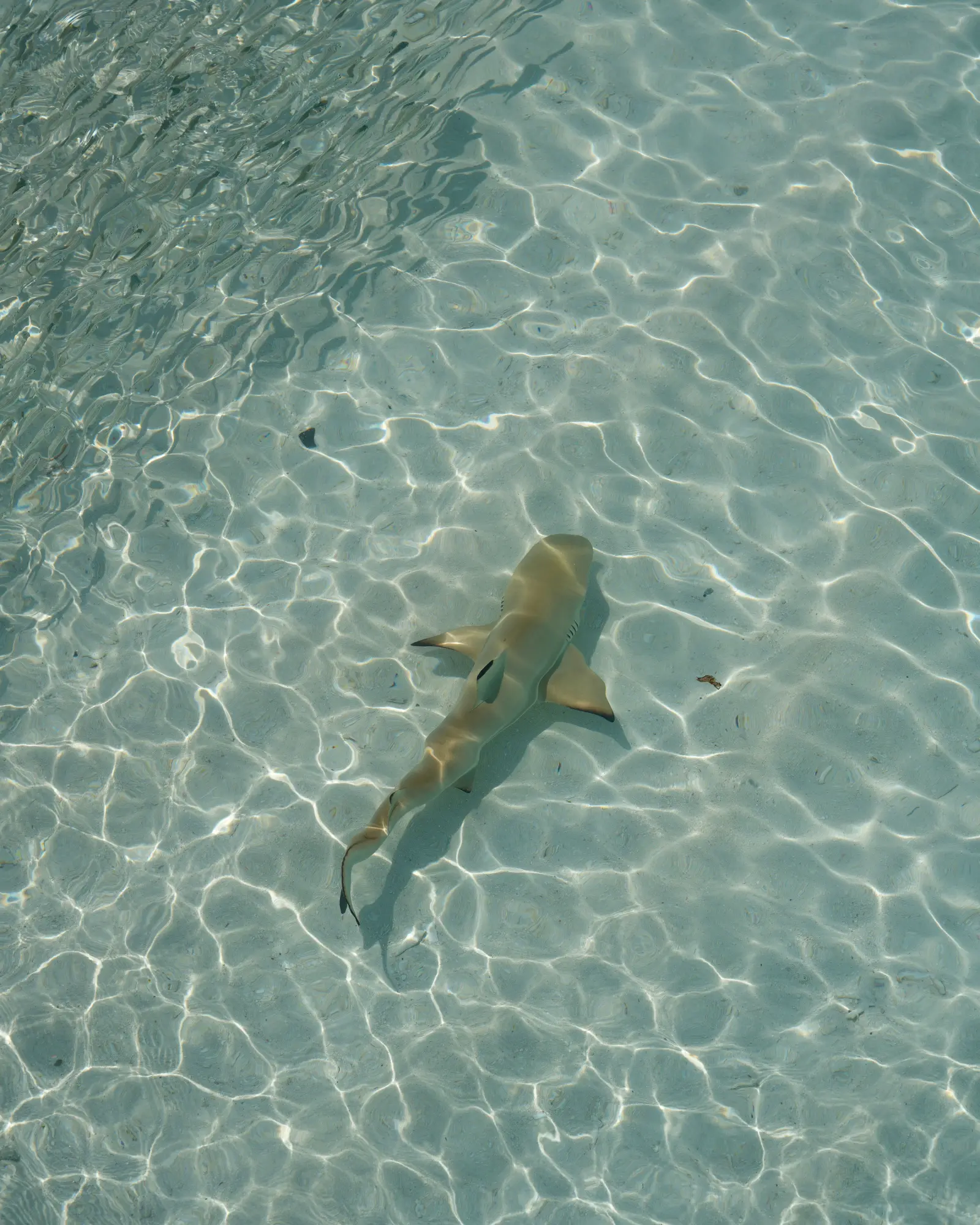
- Juveniles: three to five young sharks under one metre long swam in the shallows near the beach on the opposite side of the bay, a sign the bay is still used as a nursery.
- Camera results: the sharks that came to the bait were mostly subadults, and up to 9 appeared in a single frame. Their response was stronger in the evening and at night.
The DNP says the count is a tool for park management rather than just a number, and that the data will be used to make decisions that protect the area.
A longer recovery story
Maya Bay was closed in 2018 after heavy tourism damaged the reef, and it reopened in January 2022 with visitor limits and an annual rest. Shark numbers have risen since:
- November 2021: DNP drone footage showed roughly 100 sharks, after the bay had been closed since 2018.
- July 2025: The Shark Watch Project counted 158 sharks at once, the highest at that time.
- June 2026: a DNP survey counted up to 102 sharks in one day and saw 4 to 5 newborns under 30 cm in ankle-deep water.
- 2 September 2026: drones counted 278 adult sharks at dawn during the annual closure (1 August to 30 September). Read the DNP's report (in Thai).
- 3 November 2026: 451 sharks, the new high.
These counts used different methods at different times of day and year, so they show a general direction rather than an exact trend.
How to visit Maya Bay without adding to the pressure
Maya Bay is open for visits, and the bay's rules protect the sharks that live there:
- Swimming is not allowed. Visitors can walk the beach and wade in the shallows.
- Boats do not enter the bay. They land at the pier on the back side of the island.
- Visitor numbers and time are limited by the park, so a visit is short.
Dawn is also the quietest time at the bay, with no tourist boats or visitors. Later in the day you will see far fewer sharks than the dawn counts suggest, and sightings are never guaranteed. Juvenile sharks sometimes come close to the beach, so keep your distance and let them swim past.
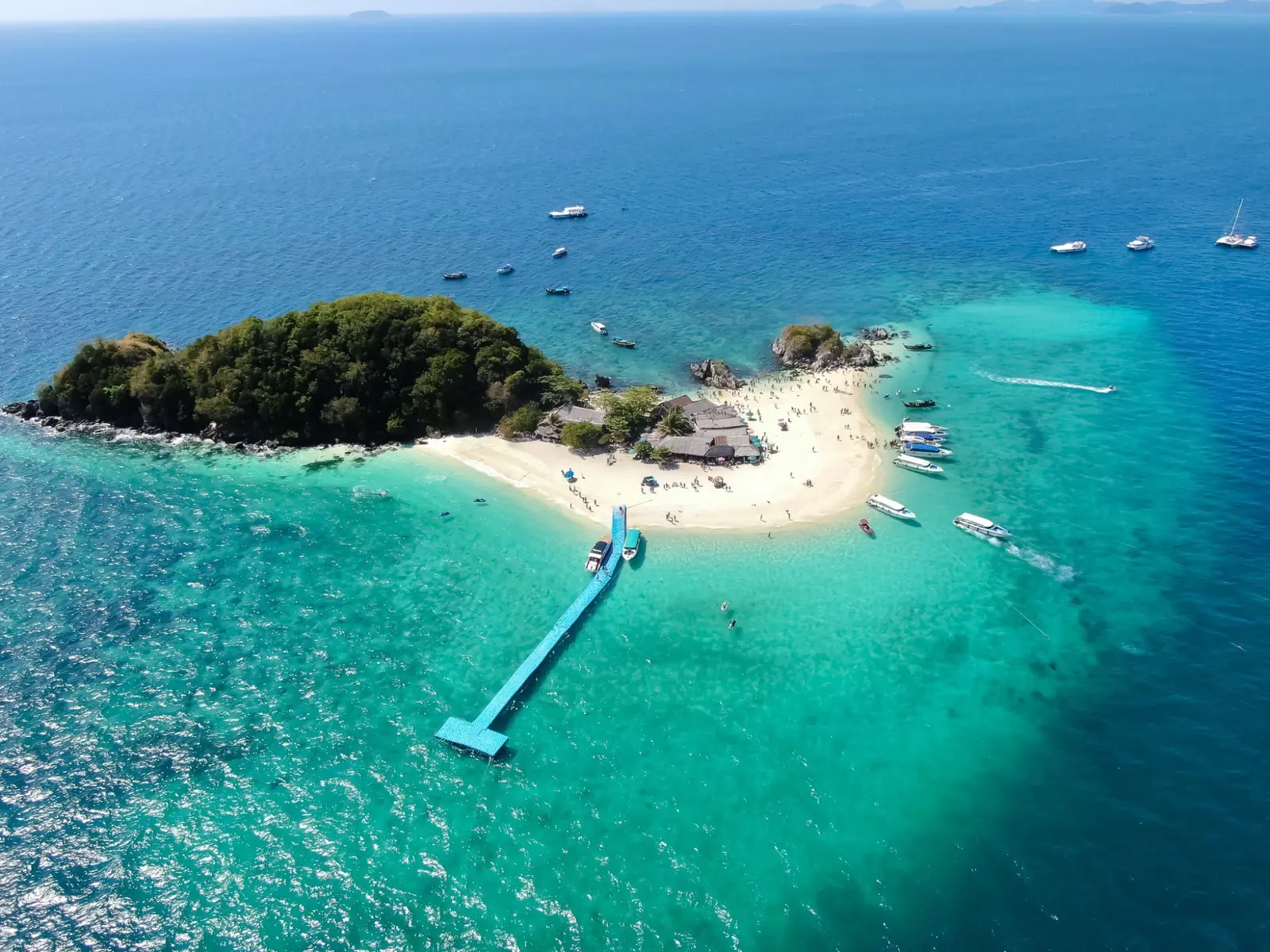
Choosing an operator that respects these limits matters. On our tours we plan entry timing in advance, brief every guest on the path and swimming rules, and keep the stop at Maya Bay smooth and less crowded as much as possible, so most of your day is spent snorkelling and relaxing at Khai Island and Bamboo Island instead of in one crowded spot. Read more about how we travel responsibly.
You can visit on our Phi Phi Island and Bamboo Island tour, or explore all our Phi Phi Islands trips. Before you go, read our guide to Phi Phi Island rules, our Maya Bay reopening update and our Maya Bay visitor guide.
Sources: Marine National Park Research Center 3 (Trang), Facebook post of 10 November 2026 on the November survey; DNP news report on the June 2026 survey; Thai Post (14 September 2026) on the DNP's September survey; Khaosod English (July 2025) on the Shark Watch Project survey; Thai PBS (November 2021) on the DNP drone footage.